
Diego Milito never needed to be the loudest man on the pitch. In the 2010 Champions League final, he was the most decisive. Two goals against Bayern Munich—one a trademark composed finish。the other a ruthless solo effort—etched his name into Inter Milan folklore. I remember watching that match and thinking: this is what a center-forward looks like when every movement has a purpose. No wasted sprints, no theatrical gestures. Just the cold, calculated work of a striker who understood exactly where the space would appear.
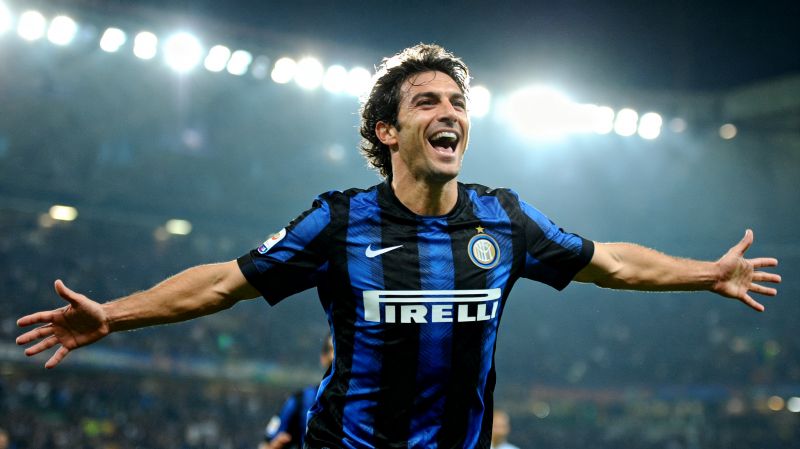
Milito’s peak season—2009-10—was not a fluke. He scored 30 goals across all competitions, including decisive strikes against Roma。Juventus, and Chelsea. What stood out was not the volume but the timing. He scored in the Coppa Italia final, the Champions League final, and the Serie A title run-in. That’s not luck;that’s the signature of a player who thrives on pressure. His movement was rarely flashy. He’d drift to the back post, hold his run half a second longer than defenders expected, then attack the near post. Simple. Brutal. Effective.Before Inter。Milito’s career was a slow burn. He bounced between Racing Club, Genoa, and Real Zaragoza—never at a “superclub” until he was 30. That trajectory shaped him. At Zaragoza, he scored 23 goals in 37 league games during the 2008-09 season, dragging a mid-table side to safety. I’ve always felt that period is underappreciated. He wasn’t playing with world-class creators;he was the entire attack. That experience made him patient. When he arrived at Inter, he didn’t demand the ball. He waited, read the game, and struck.
Injuries stole his best years after 2010. A torn knee ligament in 2011 limited him to just 17 league appearances over the next two seasons. He returned to Racing Club in 2014 and scored 11 goals in 20 matches at age 35—a quiet coda for a player who never chased the spotlight. Rafael Benítez once called him “the most intelligent forward I’ve coached” That intelligence was his real weapon. He didn’t rely on explosive pace or dribbling. He relied on angles, timing, and a striker’s instinct that rarely misfired in big moments.Diego Milito’s legacy doesn’t fit neatly into highlight reels. He won the treble, scored in two finals, and then faded from European view. But ask any Inter fan about the 2010 final, and they’ll mention his name first. That’s the measure of a quiet killer—the memory of two goals that mattered more than a thousand ordinary ones.