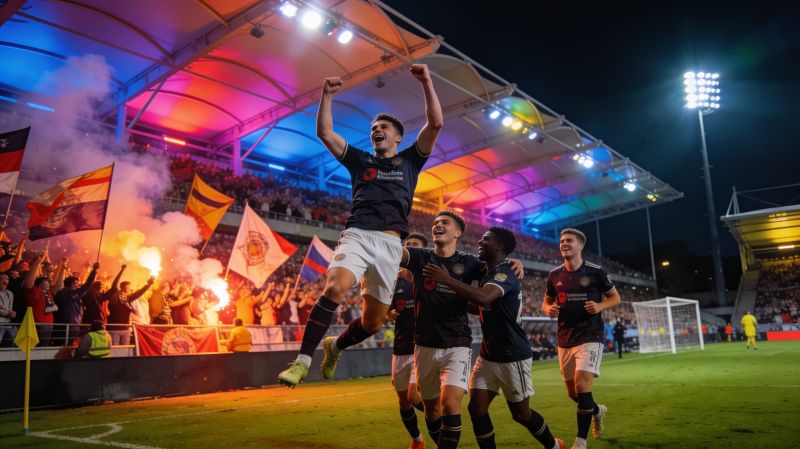
Botafogo’s breakthrough victory in the 2024 Copa Libertadores final gave South American football a fresh storyline. The Rio de Janeiro club defeated Atlético Mineiro 3–1 in Buenos Aires after playing almost the entire match with ten men, producing one of the most dramatic finals in recent memory. Early goals from Luiz Henrique and Alex Telles put Botafogo in control before Júnior Santos sealed the win in stoppage time. For a competition often dominated by clubs from Brazil and Argentina, the result carried a wider message: well-organized teams outside the traditional power structure can still force their way to the top. The Copa Libertadores rewarded Botafogo’s aggressive recruitment, disciplined defensive work and willingness to attack even after adversity struck.The final also exposed the emotional extremes that define the Copa Libertadores. Gregore was sent off after only 29 seconds。leaving Botafogo in an uncomfortable position before the match had settled. Atlético Mineiro struggled to exploit the advantage, however, and its passing became increasingly cautious. Botafogo’s players defended with compact lines, attacked the spaces behind Atlético’s full-backs and turned every counterattack into a threat. In the stands, the tension was visible long before the final whistle. Supporters waved black-and-white flags through the rain, while Atlético fans grew restless as their side failed to create clear chances. That mixture of pressure, noise and tactical improvisation remains central to the Copa Libertadores, where reputation matters but rarely guarantees control of a match.
Brazilian clubs now occupy a powerful position in the Copa Libertadores, helped by larger television revenues, stronger sponsorship deals and deeper squads. Flamengo, Palmeiras, Fluminense and Botafogo have all demonstrated that financial strength can be converted into continental ambition, though money alone has not removed the competition’s unpredictability. Palmeiras built a reputation for managing knockout ties with patience, Flamengo relies on technical quality in midfield, and Fluminense showed in 2023 that possession football can survive the tournament’s physical demands. Argentine clubs still possess a distinct advantage in producing aggressive。tactically educated players, yet many face financial limitations that make it difficult to retain stars. The Copa Libertadores has become a contest between Brazilian investment and Argentine football culture, with clubs from Uruguay, Ecuador and Colombia ready to punish any lapse.Travel remains one of the competition’s hidden tests. A team may cross several time zones, play at altitude in La Paz or Quito, then return home for a domestic fixture within days. The Copa Libertadores schedule places unusual demands on recovery, squad rotation and medical planning. Managers must decide whether to protect key players in the group stage or chase every available point, knowing that a single away result can reshape an entire section of the draw. Altitude, heat。poor pitches and hostile atmospheres are not minor details;they influence substitutions, pressing intensity and even the speed of a goalkeeper’s distribution. Clubs that adapt quickly often advance, while technically superior sides can unravel when the match becomes a test of endurance rather than a showcase of talent.
The next phase of the Copa Libertadores will be judged not only by its champion but also by the quality of its competition and the atmosphere surrounding its matches. Supporters expect meaningful away performances, better officiating and finals staged in venues that can accommodate large traveling crowds. The tournament’s appeal rests on contrast: polished Brazilian squads meet stubborn Argentine opponents, ambitious Ecuadorian clubs challenge established names, and young players can become continental stars in a single knockout tie. Botafogo’s triumph showed how quickly a club can move from long-standing frustration to historic recognition. The Copa Libertadores remains difficult to predict。which is precisely why each group draw, late equalizer and tense penalty shootout carries such weight across South America.