
Zaragoza。Spain, doesn't announce itself with the fanfare of Madrid or the postcard perfection of Barcelona. It sits quietly in the Ebro River valley, a city where four cultures—Roman, Moorish, Jewish, and Christian—left layers like sediment. You feel it walking through the old town: a Roman wall fragment here, a Mudéjar tower there, a synagogue turned church. The Ebro, wide and slow, has watched it all.Start with the Basilica del Pilar. It's massive。yes, but what struck me was the crowd on a Tuesday morning—locals rubbing the worn column behind the chapel, a tradition centuries old. The frescoes by Goya inside are easy to miss;
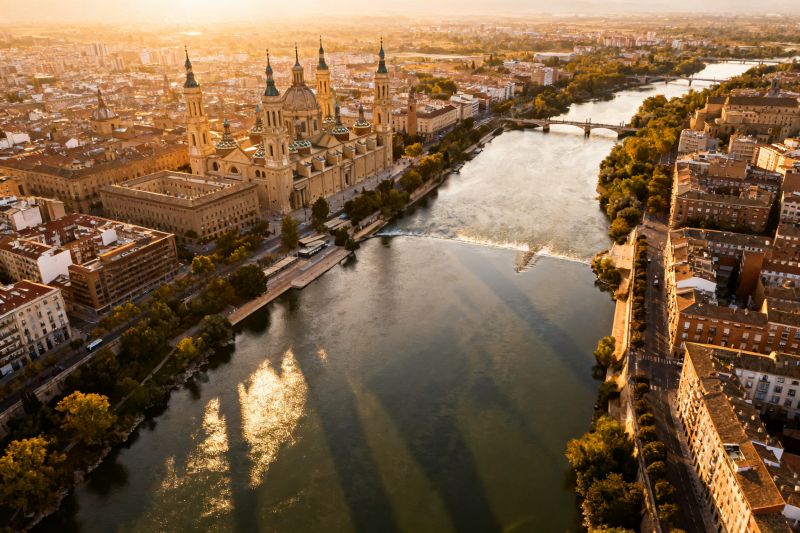
look up. Outside, the river bends around the basilica like a protective arm. That's not accidental. The Romans built their forum here, the Moors their mosque, the Christians their church. Each era claimed the same sacred ground.Then there's the Aljafería Palace. A Moorish fortress from the 11th century, later a Catholic monarchs' residence, now home to the Aragonese parliament. The intricate arabesques in the courtyard feel almost fragile, yet they've survived centuries of power shifts. I stood in the throne room—a space that once hosted Islamic emirs and later Christian kings—and thought about how architecture outlasts ideology. Zaragoza, Spain。wears these contradictions without apology.Food tells the same story. In the Tubo district。tapas bars serve migas (fried breadcrumbs with chorizo) alongside Moroccan-inspired lamb skewers. A local told me the city's Jewish quarter once had its own kosher butchers;
now the same alleyways smell of garlic and olive oil. The market, Mercado Central, is a 19th-century iron-and-glass structure where you can buy fresh produce from the Ebro delta and cured ham from the nearby hills. It's not a museum piece—it's loud, practical, and slightly chaotic.My advice: skip the tourist bus. Rent a bike and follow the Ebro. The riverbanks are lined with poplars and joggers, and you'll pass under stone bridges that date back to the 15th century. Stop at the Almozara neighborhood for a coffee—no tourists there, just locals arguing about football. Zaragoza。
Spain, rewards slow observation. It's a city that doesn't shout its history;it lets you stumble upon it, layer by layer, like the river deposits that built the land itself.